Sizing agents play a crucial role in the papermaking industry, influencing various paper properties, including opacity. As a supplier of Sizing Agents, I've witnessed firsthand the impact these agents can have on paper quality. In this blog, we'll explore the effect of a sizing agent on the opacity of paper, delving into the science behind it and the practical implications for papermakers.
Understanding Opacity in Paper
Opacity is a measure of how much light is blocked by a sheet of paper. It is an important property, especially for applications where the back side of the paper should not show through, such as in books, magazines, and packaging. High opacity paper provides better readability and a more professional appearance.
The opacity of paper is influenced by several factors, including the type of fibers used, the filler content, and the surface characteristics of the paper. Sizing agents can affect opacity by altering the surface properties of the paper and interacting with the fibers and fillers.
How Sizing Agents Work
Sizing agents are applied to the surface of the paper during the papermaking process. They form a thin film on the paper surface, which can have several effects:
- Hydrophobicity: Sizing agents can make the paper more resistant to water and other liquids. This is important for applications where the paper needs to protected from moisture, such as in packaging and printing.
- Smoothness: The film formed by the sizing agent can improve the smoothness of the paper surface, which can enhance printability and reduce ink penetration.
- Strength: Sizing agents can also increase the strength of the paper, making it more resistant to tearing and folding.
The Effect of Sizing Agents on Opacity
The effect of sizing agents on opacity can be complex and depends on several factors, including the type of sizing agent used, the concentration of the agent, and the properties of the paper.
Type of Surface Sizing Agent
There are several types of surface sizing agents available, including Rosin Sizing Agent, AKD Sizing Agent, and Surface Sizing Agent. Each type of agent has its own unique properties and can affect opacity in different ways.
- Rosin Sizing Agent: Rosin sizing agents are one of the oldest and most widely used types of surface sizing agents. They work by forming a hydrophobic film on the paper surface, which can reduce the penetration of water and other liquids. Rosin sizing agents can also improve the smoothness of the paper surface, which can enhance opacity.
-

- AKD Sizing Agent: AKD (Alkyl Ketene Dimer) sizing agents are a newer type of surface sizing agent that offer several advantages over rosin sizing agents. AKD sizing agents are more effective at reducing water penetration and can provide better sizing at lower concentrations. They can also improve the strength and stiffness of the paper, which can enhance opacity.
-

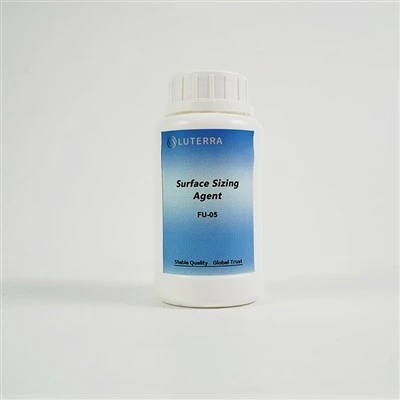
- Surface Sizing Agent: Surface sizing agents are a broad category of agents that can include a variety of chemicals, such as starches, gums, and synthetic polymers. These agents can be used to improve the surface properties of the paper, such as smoothness, strength, and water resistance. Surface sizing agents can also affect opacity by altering the surface characteristics of the paper and interacting with the fibers and fillers.

- Concentration of the Sizing Agent
-
The concentration of the Sizing Agent can also affect opacity. In general, higher concentrations of the agent can lead to higher opacity. However, there is a limit to how much Sizing Agent can be applied to the paper without causing negative effects, such as reduced printability and increased cost.Properties of the Paper
The properties of the paper, such as the type of fibers used, the filler content, and the surface characteristics, can also affect the effect of Sizing Agents on opacity. For example, papers with a high filler content may require more Sizing Agent to achieve the same level of opacity as papers with a low filler content.
-
Practical Implications for Papermakers
The effect of Sizing Agents on opacity has several practical implications for papermakers. By understanding how Sizing Agents work and how they can affect opacity, papermakers can make informed decisions about the type and concentration of Sizing Agent to use in their papermaking process.
Improving Opacity: Papermakers can use Sizing Agents to improve the opacity of their paper. By choosing the right type of Sizing Agent and applying it at the appropriate concentration, papermakers can achieve the desired level of opacity without sacrificing other important paper properties, such as printability and strength.
Reducing Cost: Sizing Agents can also help papermakers reduce cost by reducing the amount of filler needed to achieve the desired level of opacity. By using a Sizing Agent, papermakers can achieve the same level of opacity with less filler, which can reduce the cost of raw materials.
Enhancing Printability: Sizing Agents can improve the printability of paper by reducing ink penetration and improving the smoothness of the paper surface. This can result in better print quality and reduced waste.
-
Conclusion
Sizing Agents can have a significant effect on the opacity of paper. By understanding how Sizing Agents work and how they can affect opacity, papermakers can make informed decisions about the type and concentration of Sizing Agent to use in their papermaking process. As a supplier of Sizing Agents, I'm committed to providing high-quality products and technical support to help papermakers achieve the best possible results.
If you're interested in learning more about our Sizing Agents or would like to discuss your specific papermaking needs, please don't hesitate to contact us. We'd be happy to help you find the right solution for your application.
-
References
"Papermaking: The History and Technology of an Ancient Craft" by Mark Kurlansky
"Handbook of Pulp and Paper Technology" by Christopher J. Biermann
"Surface Sizing of Paper" by R. J. K. Woodward