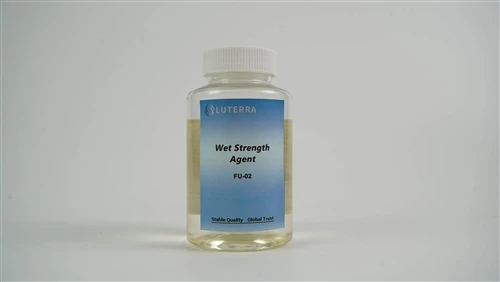
Yo, folks! I'm here as a supplier of Wet Strength Agents, and today we're gonna dig into how these nifty little chemicals impact the print quality of paper. It's a topic that might not seem super exciting at first glance, but trust me, it's pretty crucial in the paper and printing industries.
Let's start with the basics. What the heck is a wet strength agent? Well, a Wet Strength Agent is a chemical additive that, as the name suggests, increases the strength of paper when it gets wet. Normally, paper loses a significant amount of its strength when it comes into contact with water or moisture. But with a wet strength agent added during the papermaking process, the paper can maintain a decent level of integrity even when wet.
Now, you might be wondering, "How on earth does that relate to print quality?" Well, it turns out that the strength of the paper, both dry and wet, plays a huge role in how well it can handle the printing process.


First off, let's talk about the printing process itself. There are several different methods of printing, like offset printing, flexographic printing, and digital printing. Each of these methods has its own unique requirements for the paper, but one thing they all have in common is that they involve some form of contact between the printing equipment and the paper.
In offset printing, for example, the ink is transferred from a plate to a rubber blanket and then onto the paper. This process requires the paper to be able to withstand the pressure and friction of the printing press. If the paper isn't strong enough, it can tear or wrinkle during the printing process, which obviously messes up the print quality big time. That's where wet strength agents come in handy. By increasing the paper's strength, they help the paper hold up better under the pressure of the printing press, resulting in a cleaner, sharper print.
Flexographic printing is another common method, especially for packaging materials. In this process, the ink is applied to the paper using a flexible relief plate. The paper needs to be able to absorb the ink evenly and quickly without smudging or bleeding. A paper treated with a wet strength agent is often more resistant to ink penetration and spreading, which means the printed image will be more precise and vibrant.
Digital printing, on the other hand, uses toner or inkjet technology to apply the image directly to the paper. This method requires the paper to have a smooth surface and good ink adhesion. The wet strength agent can help improve the paper's surface properties, making it easier for the ink to bond to the paper and reducing the chances of the ink flaking off or smudging.
But it's not just about the physical strength of the paper during the printing process. The wet strength agent can also have an impact on the paper's surface chemistry, which in turn affects the print quality. For example, some wet strength agents can change the pH of the paper, which can influence how the ink reacts with the paper. A slightly alkaline paper, for instance, can sometimes result in better ink adhesion and color development.
Another aspect is the moisture content of the paper. During the printing process, the paper can absorb moisture from the environment or from the ink itself. If the paper doesn't have enough wet strength, this absorbed moisture can cause the paper to expand or warp, leading to misregistration and other print quality issues. A wet strength agent helps to stabilize the paper's dimensions by reducing its sensitivity to moisture, ensuring that the printed image stays in place and looks its best.
Now, let's compare wet strength agents with Dry Strength Agent. While dry strength agents are mainly used to increase the paper's strength when it's dry, wet strength agents focus on maintaining the paper's strength in wet conditions. Both are important for print quality, but they serve different purposes. A combination of both dry and wet strength agents can often result in paper that has excellent strength and printability, both dry and wet.
So, how do you choose the right wet strength agent for your paper? Well, there are a few factors to consider. First, you need to think about the type of paper you're making. Different types of paper, like newsprint, magazine paper, or packaging paper, have different requirements for strength and printability. You also need to consider the printing method you'll be using. Some wet strength agents work better with certain printing methods than others.
Another important factor is the cost. Wet strength agents can vary in price depending on their quality and effectiveness. You need to find a balance between the cost and the desired print quality. Sometimes, a higher-quality wet strength agent might cost more upfront, but it can save you money in the long run by reducing print defects and waste.
As a supplier of wet strength agents, I've seen firsthand the impact that these chemicals can have on print quality. I've worked with many paper manufacturers and printers to help them choose the right wet strength agent for their specific needs. And let me tell you, it's always satisfying to see the improvement in print quality that comes with using the right product.
If you're in the paper or printing industry and you're looking to improve your print quality, I'd highly recommend considering using a wet strength agent. Whether you're a small printer or a large paper mill, the right wet strength agent can make a big difference in the quality of your final product.
So, if you're interested in learning more about our wet strength agents or discussing your specific needs, don't hesitate to reach out. We're here to help you find the best solution for your business. Let's work together to take your print quality to the next level!
References
- Hubbe, M. A., Rojas, O. J., Schrader, K., & Zhong, L. (2008). Paper Chemistry: An Introduction. Oxford University Press.
- Casey, J. P. (1996). Pulp and Paper: Chemistry and Chemical Technology. Wiley-Interscience.
- ATSM International Standards on Paper and Paperboard Testing.
- TAPPI (Technical Association of the Pulp and Paper Industry) Publications on Paper Properties and Printing Processes.