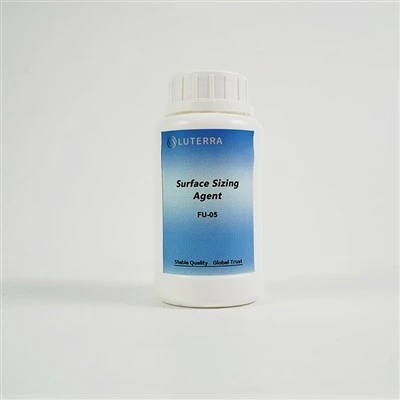
In the paper industry, the printability of paper is a crucial factor that determines the quality of printed products. As a supplier of Surface Sizing Agent, I often encounter questions from customers about whether a surface sizing agent affects the printability of paper. In this blog post, I will delve into this topic and provide a comprehensive analysis based on scientific knowledge and practical experience.

Understanding Surface Sizing Agents
Surface sizing agents are chemicals applied to the surface of paper during the papermaking process. Their primary function is to improve the surface properties of paper, such as water resistance, smoothness, and strength. There are several types of surface sizing agents available in the market, including Rosin Sizing Agent and AKD Sizing Agent. Each type has its own characteristics and applications.
Rosin sizing agents are one of the oldest and most widely used sizing agents. They are derived from natural rosin and are typically used in acidic papermaking systems. Rosin sizing agents work by forming a hydrophobic layer on the paper surface, which reduces the penetration of water and ink. This results in improved printability, as the ink is less likely to spread or bleed on the paper.
AKD sizing agents, on the other hand, are synthetic sizing agents that are used in neutral or alkaline papermaking systems. AKD sizing agents react with the cellulose fibers in the paper to form a covalent bond, which provides long - term water resistance. AKD - sized papers also have good printability, as the smooth and hydrophobic surface allows for better ink transfer and adhesion.
Impact on Printability
Ink Absorption and Penetration
One of the key aspects of printability is how the paper absorbs and retains ink. A surface sizing agent can significantly affect ink absorption. When a surface sizing agent is applied to the paper, it forms a barrier on the paper surface. This barrier reduces the rate at which ink penetrates into the paper.
For example, in offset printing, if the paper absorbs ink too quickly, the ink may spread and cause a loss of sharpness in the printed image. A well - sized paper with a surface sizing agent can control the ink penetration, ensuring that the ink remains on the surface and produces a clear and sharp print. On the contrary, if the sizing is too strong, the ink may not be able to adhere properly to the paper surface, resulting in poor print quality.
Surface Smoothness
Surface smoothness is another important factor in printability. Surface sizing agents can improve the smoothness of the paper surface. A smooth surface provides better contact between the printing plate or inkjet nozzle and the paper, allowing for more uniform ink transfer.
When the paper surface is rough, the ink may not be evenly distributed, leading to uneven printing. By applying a surface sizing agent, the irregularities on the paper surface can be filled, resulting in a smoother surface. This smoothness enhances the print quality, especially in high - resolution printing applications.
Print Gloss
Print gloss is often desired in many printing applications, such as magazines and brochures. Surface sizing agents can contribute to the print gloss. A properly sized paper surface can reflect light more uniformly, giving the printed image a glossy appearance.
The type of surface sizing agent used can also affect the gloss level. For instance, some synthetic surface sizing agents are designed to enhance the gloss of the printed paper. By adjusting the formulation and application of the surface sizing agent, papermakers can achieve the desired gloss level for different printing requirements.
Case Studies and Practical Experience
In my experience as a surface sizing agent supplier, I have seen numerous cases where the use of surface sizing agents has improved the printability of paper. For example, a printing company was experiencing issues with ink bleeding and poor print sharpness on their offset - printed brochures. After switching to a paper treated with our surface sizing agent, the print quality improved significantly. The ink was better controlled on the paper surface, and the printed images were sharper and more vibrant.
Another case involved a digital printing company. They were using a paper that had a rough surface, which led to inconsistent ink transfer in their inkjet printers. By using our surface sizing agent to treat the paper, the surface smoothness was improved, and the inkjet prints became more uniform and of higher quality.
Factors to Consider
While surface sizing agents can have a positive impact on printability, there are several factors that need to be considered. The type of printing process (e.g., offset, flexography, inkjet) plays a crucial role. Different printing processes have different requirements for paper surface properties. For example, inkjet printing requires a paper surface that can quickly absorb and dry the ink without spreading, while offset printing needs a paper with good water resistance and ink transfer properties.
The concentration and application method of the surface sizing agent also matter. If the concentration is too high, it may lead to over - sizing, which can cause problems such as poor ink adhesion. On the other hand, if the concentration is too low, the desired improvement in printability may not be achieved. The application method, whether it is by spraying, dipping, or coating, can also affect the distribution and effectiveness of the surface sizing agent on the paper surface.
Conclusion
In conclusion, a surface sizing agent can have a significant impact on the printability of paper. It can control ink absorption and penetration, improve surface smoothness, and enhance print gloss. However, to achieve the best results, it is essential to choose the right type of surface sizing agent, consider the printing process requirements, and optimize the concentration and application method.
As a supplier of Surface Sizing Agent, I am committed to providing high - quality products and technical support to help papermakers and printers improve the printability of their papers. If you are interested in learning more about our surface sizing agents or have any questions regarding paper printability, please feel free to contact us for a detailed discussion and potential procurement. We look forward to working with you to achieve better print quality and product performance.
References
- Hubbe, M. A., & Gill, R. A. (2006). "Sizing of paper and paperboard: A review of mechanisms and practice." Tappi Journal, 5(1), 45 - 55.
- Kocman, V., & Kolar, M. (2012). "The influence of surface sizing on the printability of paper." Acta Polytechnica, 52(2), 10 - 15.
- Shen, J., & Qian, X. (2018). "Effect of surface sizing agents on the properties of paper and its printability." Journal of Pulp and Paper Science, 44(1), 1 - 8.