Foam in pulp and paper processes is inevitable, but controlling it without introducing new problems is the challenge. A poorly chosen or misapplied silicone defoamer can lead to spots, pinholes, fabric sticking, and even interfere with downstream operations.
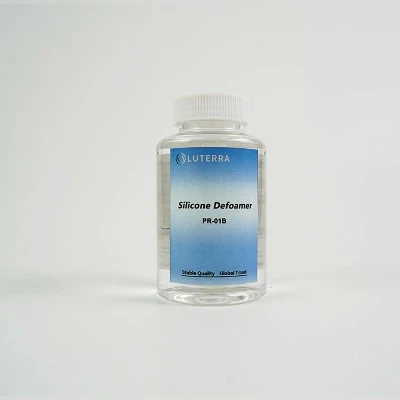
PR-01B Silicone Defoamer from Luterra Advanced Materials is a new emulsion-type defoamer refined from methyl polysiloxane and nano-silica, combined with polymeric surfactants. It quickly eliminates and effectively suppresses foam, exhibiting excellent thermal and chemical stability. This guide covers five critical mistakes to avoid when selecting and using a silicone defoamer.
Mistake #1: Using a Silicone Defoamer That Causes Spots or "Fish Eyes"
One of the most common and costly complaints about silicone defoamers is the formation of "silicone spots" on the paper surface or "fish eyes" in coatings. This occurs when the emulsion breaks down under shear or temperature stress, releasing free silicone oil that aggregates locally.
PR-01B incorporates specialty polymeric surfactants that greatly improve the dispersibility and stability of the emulsion in the aqueous phase. This ensures that the silicone oil disperses evenly, preventing localized aggregation that would otherwise cause defects.
Mistake #2: Choosing a Defoamer That Can't Handle Your System's Conditions
High temperatures (e.g., in cooking sections) and strongly alkaline environments are common in pulping and papermaking. A defoamer that breaks down under these conditions will fail to control foam and may leave residues.
PR-01B, based on methyl siloxane, provides excellent thermal stability and chemical inertness. It maintains its performance without degradation under high temperatures and across a wide pH range, and does not experience emulsion breaking or separation.
Mistake #3: Overlooking the Impact on Wet End Chemistry
Silicone defoamers can interact with other wet-end chemicals, potentially affecting sizing efficiency, retention, or causing deposits.
As a non-polar compound, PR-01B does not interact with water or polar-group-containing substances. It does not react chemically with the defoaming system, making it a safe choice for complex wet-end chemistry.
Mistake #4: Using the Wrong Addition Method for Your Process
Different processes and foam types may require different addition strategies. Using a continuous addition method when a shock treatment is needed-or vice versa-can reduce effectiveness.
For optimal results with PR-01B:
Direct Addition: Can be added directly to the foaming system. Recommended dosage: 0.05% – 0.1%.
Diluted Addition: Can be diluted with 5–10 parts water before addition. Diluted solution should be used immediately.
Dynamic Processes: Adding during dynamic processes provides both foam suppression and defoaming effects. Typical dosage: 0.01% – 0.1%.
Mistake #5: Not Evaluating Long-Term Stability and Storage
A defoamer that gels or separates during storage is ineffective and creates waste. This is especially problematic for emulsion-type products.
PR-01B is a white emulsion with good fluidity and dispersibility. It does not gel upon prolonged storage and maintains stability (no separation after 15 minutes of centrifugation at 3000 rpm). Store sealed in a ventilated, dry place at 5°C – 40°C, avoiding direct sunlight.
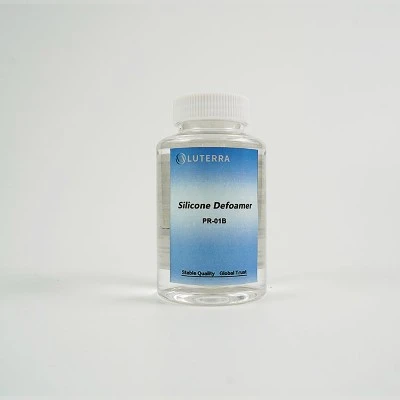
PR-01B Silicone Defoamer: Product Specifications at a Glance
| Parameter | Specification |
|---|---|
| Appearance | White emulsion, good fluidity |
| pH (25°C, 1%) | 7.0 ± 0.5 |
| Active Content | 20% ± 1% |
| Ionicity | Non-ionic |
| Stability | No separation after 15 min at 3000 rpm |
| Defoaming Performance | Foam height ≤ 25mm, eliminated within 10s |
| Water Solubility | Uniformly dispersible, no oil floating |
Application Scope
PR-01B is widely used in:
Papermaking
Water treatment
Textile dyeing and printing
Coatings and inks
Tips for Optimal Results
Direct dosage: 0.05% – 0.1% of foaming system
Dynamic dosage: 0.01% – 0.1%
Dilution: Can be diluted with 5–10 parts water (use immediately)
Storage: 5°C – 40°C, sealed, ventilated, dry
Frequently Asked Questions
Q: Does this product cause "silicone spots" on the paper surface or "fish eyes" in coatings?
A: No, it does not. Specialty polymeric surfactants improve dispersibility and stability, preventing localized aggregation.
Q: Is it stable under high temperature and strong alkali conditions?
A: Yes. The methyl siloxane structure provides excellent thermal stability and chemical inertness, maintaining performance without degradation or emulsion breaking.
Q: Can I get a sample?
A: Yes. Samples and customized formulation support are available. For any process compatibility issues, please contact us for professional solutions.
Ready to eliminate foam without the side effects?
Contact Luterra Advanced Materials for a free sample and expert consultation. Our technical team can help you select the right defoamer and optimize addition methods for your specific system. [Get Free Quote / Contact Now]