Membrane fouling from scale deposits is one of the most costly problems in reverse osmosis (RO), nanofiltration (NF), and ultrafiltration (UF) systems. It reduces flux, increases energy consumption, and leads to frequent membrane cleaning or replacement. A poorly chosen or misapplied antiscalant can fail to protect membranes or even cause secondary contamination.
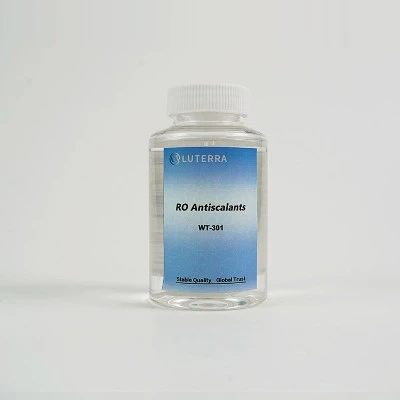
WT-301 RO Reverse Osmosis Scale Inhibitor Agent from Luterra Advanced Materials is a low-molecular, eco-friendly formula with strong chelating and dispersing capacity. It achieves a scale inhibition rate of ≥98% and is designed for complex feed water with high hardness and high alkalinity. This guide covers five critical mistakes to avoid when selecting and using an RO antiscalant.
Mistake #1: Using an Antiscalant That Can't Handle High Hardness and High Alkalinity
Many antiscalants perform well under standard conditions but fail when challenged with complex feed water containing high levels of calcium, magnesium, and bicarbonate.
WT-301 features strong chelating and dispersing capacity. It tolerates water with high hardness and high alkalinity and effectively delays crystal precipitation on membrane surfaces. This makes it suitable for challenging water sources where standard antiscalants fall short.
Mistake #2: Mixing the Antiscalant with Biocides
Direct mixing of antiscalant and biocide is a common but serious mistake. The components can react, leading to reduced efficacy of both chemicals and potential membrane damage.
Direct mixing of WT-301 with biocides is not allowed. It is recommended to adopt separate dosing points and staggered dosing to prevent component reactions and efficacy reduction. Always consult the manufacturer for compatibility guidance when using multiple chemicals.
Mistake #3: Overlooking the Importance of a Low-Fouling Formula
Some antiscalants contain high-molecular-weight polymers or colloidal components that can themselves foul the membrane, causing flux decline and secondary contamination.
WT-301 adopts a low-molecular eco-friendly formula without colloid residue. It will not cause secondary membrane contamination and ensures stable membrane flux. This is critical for maintaining long-term system performance and reducing cleaning frequency.
Mistake #4: Dosing at the Wrong Point or with Incorrect Dilution
The dosing point and dilution method significantly affect antiscalant performance. Adding it after the security filter or at a point with poor mixing can reduce its effectiveness.
For optimal results with WT-301:
Dosing point: Online continuous dosing before the 5μm security filter.
Dilution: Can be dosed in stock solution directly or diluted 2–10 times.
Recommended dosage: 2–5 ppm (adjust according to raw water hardness and recovery rate).
Precaution: Avoid direct mixing with strong alkaline substances.
Mistake #5: Not Adjusting Dosage for Changing Water Quality
Water quality and system operating conditions are dynamic. Using a fixed dosage without adjustment can result in underdosing (membrane scaling) or overdosing (chemical waste).
WT-301's dosage should be adjusted according to raw water hardness and recovery rate. Regular monitoring of feed water quality and system performance is essential to ensure optimal protection and cost-effectiveness.
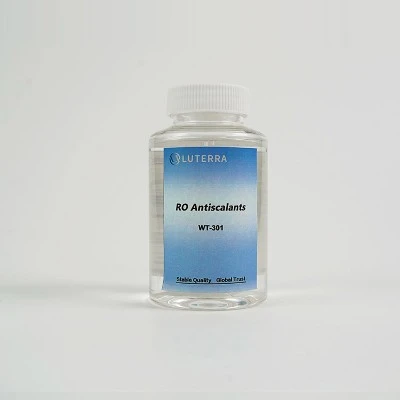
WT-301 RO Antiscalant: Product Specifications at a Glance
| Parameter | Specification |
|---|---|
| Appearance | Colorless to pale yellow transparent liquid |
| Solid content | ≥30% |
| pH value | 2.0–5.0 |
| Density | 1.10–1.20 g/cm³ |
| Viscosity | 10–50 mPa·s |
| Scale inhibition rate | ≥98% |
Application Scope
WT-301 is mainly applied in:
Reverse osmosis (RO) systems
Nanofiltration (NF) systems
Ultrafiltration (UF) systems
Tips for Optimal Results
Dosage: 2–5 ppm (adjust based on water hardness and recovery)
Dosing point: Before 5μm security filter
Dilution: Stock solution or diluted 2–10 times
Compatibility: Do not mix with biocides; use separate dosing points
Storage: Cool, dry, ventilated, away from direct sunlight
Frequently Asked Questions
Q: Is this antiscalant suitable for complex feed water with high hardness and high alkalinity?
A: Yes. It features strong chelating and dispersing capacity, tolerates water with high hardness and high alkalinity, and effectively delays crystal precipitation on membrane surfaces.
Q: Can it be mixed and dosed with common biocides for reverse osmosis systems?
A: Direct mixing is not allowed. It is recommended to adopt separate dosing points and staggered dosing to prevent component reactions and efficacy reduction.
Q: Will normal dosing cause membrane element contamination or flux decline?
A: No. Adopting a low-molecular eco-friendly formula without colloid residue, it will not cause secondary membrane contamination and ensures stable membrane flux.
Q: Can I get a sample?
A: Yes. Free samples and customized compounding services are available. For any process adaptation problems, please contact us for professional technical solutions.
Ready to protect your membranes and reduce cleaning costs?
Contact Luterra Advanced Materials for a free sample and expert consultation. Our technical team can help you optimize your antiscalant program for maximum membrane protection and system efficiency. [Get Free Quote / Contact Now]