Foam overflow, unstable liquid levels, and reduced efficiency are persistent headaches in pulping operations. These issues lead to fiber loss, sheet breaks, and increased production costs. Using the wrong defoamer-or using it incorrectly-can cause oil floating, fabric sticking, and even damage paper quality.
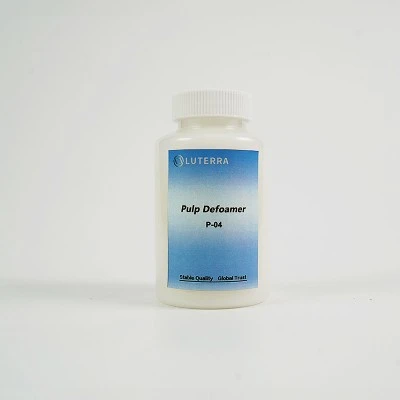
P-04 Pulp Defoamer from Luterra Advanced Materials is a modified polyether, silicone-free defoamer designed for harsh pulping conditions like black liquor systems, wastepaper pulping, high-alkali bleaching, and pulp washers. This guide covers five critical mistakes to avoid when selecting and using a pulp defoamer.
Mistake #1: Using a General Water Treatment Defoamer in Your Pulping System
General water treatment defoamers are not designed for the high temperature, high alkalinity, and high-consistency pulp found in pulping processes. They are prone to emulsion breaking, oil floating, and can cause surface defects on paper. They also fail to provide lasting foam suppression.
A pulping-specific defoamer like P-04 is resistant to high temperature, high alkalinity, and high-consistency pulp. It does not cause emulsion breaking, oil floating, or affect fiber retention and paper quality. Its defoaming and foam suppression performance is outstanding, even in the most challenging conditions.
Mistake #2: Choosing a Defoamer That Leaves Residues or Affects Paper Quality
Some defoamers leave oily residues on fibers, which can reduce paper strength, interfere with sizing, or cause spots and defects.
P-04 is formulated with silicone-free foam suppression components. It does not leave residues on fibers, does not affect paper strength or sizing, and does not cause oil floating or stick to forming fabrics or felts. This ensures that your defoamer solves the foam problem without creating new ones.
Mistake #3: Under-Dosing or Over-Dosing
Incorrect dosage is a common and costly mistake. Under-dosing fails to control foam, leading to overflow and efficiency losses. Over-dosing wastes chemical and can potentially affect system stability.
P-04 requires only a small dosage for high efficiency. The recommended dosage is 0.1–0.3 kg per metric ton of air-dried pulp for continuous addition. Start at the lower end and adjust based on actual foam levels and process conditions.
Mistake #4: Using the Wrong Addition Method for Your System
Different systems may require different addition strategies. Using a continuous addition method when a shock treatment is needed-or vice versa-can reduce effectiveness.
For optimal results with P-04:
Continuous addition: Add neat or after dilution of 5–10 times continuously to the pulping chest, pulp washer, black liquor tank, or screening chest.
Batch/shock addition: Spray directly or add at fixed points in areas where foam accumulates.
Mistake #5: Overlooking the Defoamer's Stability and Compatibility
A defoamer that breaks down under process conditions or is incompatible with your system can cause more harm than good, leading to oil floating, fabric plugging, and sheet defects.
P-04 offers stable batch performance with fast defoaming, long-lasting foam suppression, and no emulsion breaking or oil floating. It is compatible with various pulping and wet end additives and does not interfere with the system. It can fully replace both imported and domestic similar pulping defoamers.
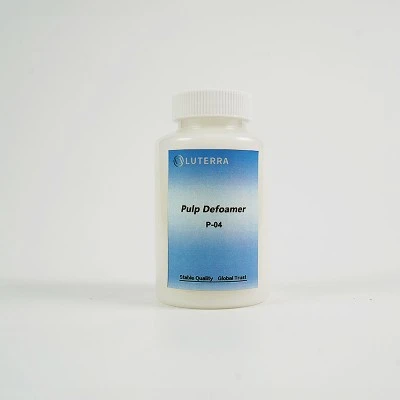
P-04 Pulp Defoamer: Product Specifications at a Glance
| Parameter | Specification |
|---|---|
| Appearance | Milky white to slightly yellow liquid |
| Odor | Slight |
| Water solubility | Easily dispersible, no oil floating |
| pH (neat solution) | 5.0–8.0 |
| Ionicity | Nonionic |
Application Scope
P-04 is highly effective in challenging conditions, including:
Black liquor systems
Wastepaper pulping
High-alkali bleaching
Pulp washers
It thoroughly resolves issues such as foam overflow, unstable liquid levels, and reduced efficiency during the pulping process.
Tips for Optimal Results
Continuous dosage: 0.1–0.3 kg per metric ton of air-dried pulp
Addition method: Add neat or diluted (5–10x) to pulping chest, washer, black liquor tank, or screening chest
Batch treatment: Spray directly on foam accumulation areas
Storage: Indoors, cool, ventilated, protect from freezing and high temperatures
Frequently Asked Questions
Q: What is the difference between a pulping defoamer and a general water treatment defoamer?
A: Pulping-specific defoamer is resistant to high temperature, high alkalinity, and high-consistency pulp. It does not cause emulsion breaking, oil floating, or affect fiber retention and paper quality. General water treatment defoamers are not resistant to the high temperature and high alkalinity of pulping, and are prone to oil floating and surface defects on paper.
Q: Is the batch quality stable? Can it replace similar imported products?
A: Batch performance is stable, with fast defoaming, long-lasting foam suppression, and no emulsion breaking or oil floating. It can fully replace both imported and domestic similar pulping defoamers.
Q: Can I get a sample?
A: Yes. Samples and customized formulation support are available. For any process adaptation or usage issues, please feel free to contact us for professional solutions.
Ready to eliminate foam problems and improve pulping efficiency?
Contact Luterra Advanced Materials for a free sample and expert consultation. Our technical team can help you optimize defoamer selection and dosage for your specific pulping conditions. [Get Free Quote / Contact Now]