In the recycling process of waste paper, the removal of toner ink is a crucial step. As a reliable deinking agent supplier, I'm excited to share with you the scientific principles behind how our deinking agents effectively remove toner ink.
Understanding Toner Ink
Toner ink is commonly used in laser printers and photocopiers. It consists of a fine powder of pigment particles, typically made of carbon black or other colorants, along with a polymer binder. The binder helps the toner adhere to the paper fibers during the printing process. When waste paper is recycled, the toner ink needs to be removed to obtain clean pulp for the production of new paper products.
The Role of Deinking Agents
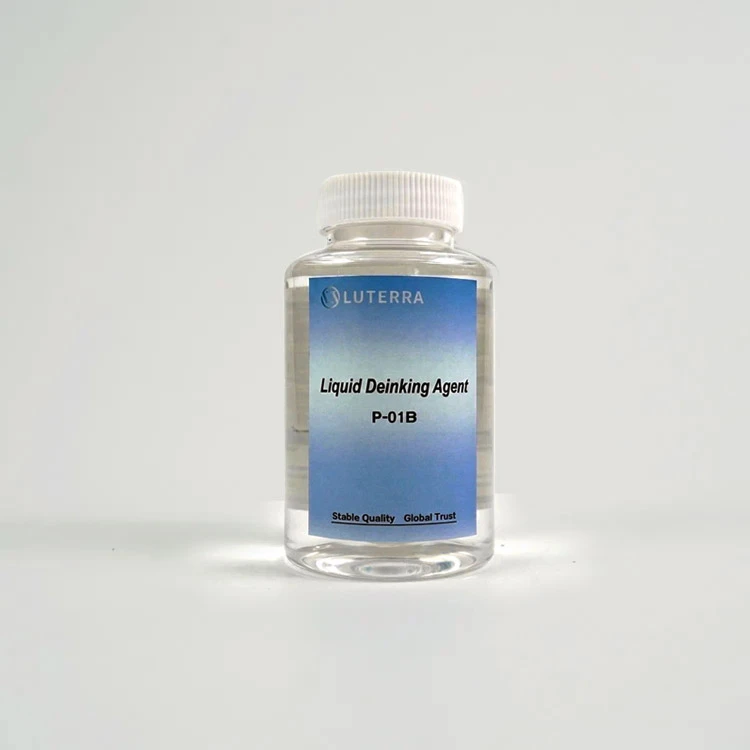
Deinking agents play a vital role in the toner ink removal process. They are formulated to break the bond between the toner particles and the paper fibers, disperse the toner particles in the water, and facilitate their separation from the pulp. Our company offers a range of Liquid Deinking Agent and Solid Deinking Agent to meet different customer needs.
Mechanisms of Deinking Agents in Removing Toner Ink
1. Wetting and Penetration
The first step in the deinking process is the wetting of the paper surface. Deinking agents contain surfactants, which are surface - active agents. These surfactants have a hydrophilic (water - loving) head and a hydrophobic (water - hating) tail. When the deinking agent is added to the pulp suspension, the surfactants adsorb onto the paper surface and the toner particles. The hydrophobic tails of the surfactants interact with the non - polar components of the toner binder, while the hydrophilic heads interact with the water. This allows the deinking agent to penetrate the toner - paper interface and weaken the adhesion between the toner and the paper fibers.
2. Emulsification and Dispersion
Once the deinking agent has penetrated the toner - paper interface, it starts to emulsify and disperse the toner particles. The surfactants in the deinking agent form micelles around the toner particles. Micelles are spherical aggregates of surfactants where the hydrophobic tails are oriented towards the inside, surrounding the toner particles, and the hydrophilic heads are exposed to the water. This emulsification process prevents the toner particles from re - aggregating and keeps them dispersed in the water phase.
3. Chemical Reactions
In addition to the physical processes of wetting and emulsification, some deinking agents may also involve chemical reactions. For example, alkaline deinking agents can hydrolyze the polymer binder in the toner. The alkaline environment breaks the chemical bonds in the binder, making it easier to separate the toner particles from the paper fibers. Oxidizing agents in the deinking formula can also react with the pigment in the toner, changing its chemical properties and facilitating its removal.
4. Flotation
Flotation is a key step in the deinking process. After the toner particles have been dispersed in the water, air bubbles are introduced into the pulp suspension. The hydrophobic toner particles attach to the air bubbles and rise to the surface of the suspension, forming a froth layer. The froth, which contains the toner particles, is then skimmed off, leaving behind a relatively clean pulp. Deinking agents can enhance the flotation process by improving the hydrophobicity of the toner particles and the stability of the air bubbles.
Factors Affecting the Deinking Process
1. Type of Deinking Agent
Different types of deinking agents have different chemical compositions and properties, which can affect their effectiveness in removing toner ink. For example, non - ionic surfactants are often used in deinking agents because they have good wetting and emulsifying properties. Anionic surfactants can also be effective, especially in combination with other chemicals. Our company's deinking agents are carefully formulated to ensure optimal performance.

2. Concentration of Deinking Agent
The concentration of the deinking agent in the pulp suspension is an important factor. If the concentration is too low, the deinking agent may not be able to effectively break the bond between the toner and the paper fibers. On the other hand, if the concentration is too high, it may lead to excessive foaming and increased cost. We recommend conducting small - scale tests to determine the optimal concentration for a specific pulp and toner ink combination.
3. Temperature and pH
The temperature and pH of the pulp suspension can also influence the deinking process. Higher temperatures generally increase the reaction rate of the deinking agent, but they may also cause damage to the paper fibers. The pH of the suspension affects the chemical reactions and the performance of the surfactants. Alkaline conditions are often preferred for deinking, as they can help break down the toner binder.
4. Pulp Consistency
The pulp consistency, which is the ratio of the weight of dry pulp to the weight of the pulp suspension, affects the deinking efficiency. A higher pulp consistency means more paper fibers and toner particles are present in a given volume of the suspension. This can make it more difficult for the deinking agent to reach all the toner particles. However, a very low pulp consistency may increase the cost of the deinking process due to the large volume of water involved.
Quality Control in Deinking
As a deinking agent supplier, we understand the importance of quality control in the deinking process. We conduct rigorous testing on our deinking agents to ensure their performance and stability. Our products are formulated to meet the highest industry standards, and we provide technical support to our customers to help them optimize the deinking process.
We regularly analyze the properties of the deinking agents, such as their surface tension, emulsifying ability, and pH. We also test the deinking agents on different types of waste paper and toner ink to evaluate their effectiveness. By continuously improving our products and processes, we can provide our customers with high - quality deinking solutions.
Advantages of Our Deinking Agents
Our deinking agents offer several advantages in the removal of toner ink. Firstly, they are highly effective in breaking the bond between the toner and the paper fibers, resulting in a high - quality pulp with low residual toner content. Secondly, our deinking agents are environmentally friendly. They are formulated to minimize the use of harmful chemicals and reduce the environmental impact of the deinking process. Thirdly, our products are cost - effective. We offer competitive prices without compromising on quality, helping our customers reduce their production costs.
Contact Us for Procurement
If you are looking for a reliable deinking agent supplier for your waste paper recycling process, we are here to help. Our team of experts can provide you with detailed information about our products, including their specifications, performance, and application methods. We can also offer customized solutions based on your specific requirements.
Whether you need a Liquid Deinking Agent or a Solid Deinking Agent, we have the right product for you. Contact us today to start a procurement negotiation and take your waste paper recycling process to the next level.