Hey there,
Let's talk about something that's been top of mind for me lately-all the different products companies (especially in pulp and paper, since that's our lane) use to keep things running smoothly, especially when it comes to retention. If you're not in the industry, you might be wondering, "Retention, like… holding onto stuff?" Exactly! When we process pulp, we want fine fibers, fillers, and other additives to stay with the paper web instead of being lost into the whitewater system. That's where retention aids come in, but there are a ton of other process chemicals out there as well, so let's break down how they differ.
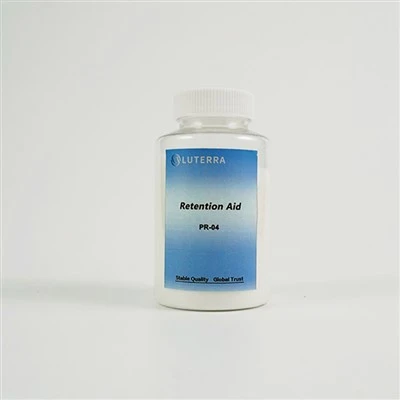
First off, a quick intro to who I am: I'm part of the team that supplies the retention aids you might have seen referenced around here. If you want to check out exactly what we offer, head over to our official page for Retention Aid right here. But before we dive into how retention aids compare to other process chemicals, let's make sure we're all on the same page about what we're talking about.
What Even Are These "Retention-Related" Products?
Wait, I know-people sometimes use different terms when they're talking about products that help keep materials where they belong in a papermaking system, right? In our industry, that can refer to several different types of process chemicals, but they do very different jobs. Retention aids, stickies control agents, scale inhibitors, biocides, and other process chemicals each target a specific part of the papermaking process.
Let's start with retention aids, since that's my bread and butter. Retention aids are high-molecular-weight polymers used to improve the retention of fine fibers, fines, fillers, and other small particles in the forming paper web. Depending on the system, they can work through mechanisms such as charge neutralization, polymer bridging, or microparticle-assisted flocculation. Cationic polyacrylamide (cPAM) is one common retention chemistry, but retention programs can also involve other polymer types and charge characteristics depending on the furnish and wet-end conditions.
The big win here? Better retention can reduce the loss of valuable fines and fillers, improve first-pass retention, support drainage, and help stabilize the wet-end operation. But there's a whole crew of other products that people often confuse with retention aids, so let's compare them one by one.
Retention Aids vs. Stickies Control Agents
First up: Stickies Control Agent. Stickies are troublesome adhesive contaminants commonly associated with recycled paper. They can come from pressure-sensitive adhesives, hot-melt adhesives, coatings, inks, tapes, and other materials introduced through recovered paper. Depending on their composition and behavior, they can contribute to deposits, sheet defects, web breaks, and contamination of machine clothing and other equipment.
So how do retention aids stack up against these? Retention aids are primarily designed to improve the retention of fibers, fines, fillers, and other furnish components-they are not a substitute for a dedicated stickies-control program. Stickies control agents, on the other hand, are designed specifically to reduce the tackiness, deposition, agglomeration, or other harmful effects of adhesive contaminants.
Do they ever work together? Absolutely. In recycled-fiber systems, a mill may need both a retention program and a stickies-control program. The two products address different problems, and the exact combination and dosing strategy should be determined according to the furnish, contaminant load, wet-end chemistry, and machine conditions. Trying to use one product as a direct replacement for the other can leave either retention performance or stickies control insufficient.
Retention Aids vs. Circulating Water Scale Inhibiting Agents
Next, let's talk about Circulating Water Scale Inhibiting Agent. Scale is the accumulation of inorganic deposits on process equipment and water-system surfaces. Depending on the mill's raw materials and water chemistry, deposits can involve substances such as calcium carbonate, calcium sulfate, silica-related compounds, and other mineral species. Closed water circuits and increased use of recycled fibers can increase the risk of scaling under certain conditions.
Retention aids and scale inhibitors-what's the difference here? Retention aids are used to improve the retention of fine furnish components in the paper web. Scale inhibitors are used to control the formation and deposition of mineral scale in circulating water systems. They are fundamentally different chemical tools for different process problems.
Now, do they interact? Potentially. Wet-end chemistry is a complex system, and changes in ionic conditions, charge demand, pH, and dissolved and colloidal substances can affect the performance of polymeric additives. That's why chemical compatibility and the order and location of addition should be evaluated in the actual mill system rather than assuming that every product will work independently.
Retention Aids vs. Biocide Deodorants
Third on the list: Biocide Deodorant. These products are used to control microbial growth in process-water systems. Uncontrolled microbial activity can contribute to slime formation, odors, deposits, equipment fouling, and paper-quality or runnability problems. Biocides may work through different mechanisms depending on whether the chemistry is oxidizing or non-oxidizing.


Retention aids have a completely different function. They are not designed to control bacteria, fungi, slime, or microbial growth. If a mill has a microbial-control problem, increasing the retention-aid dosage is not a substitute for an appropriate microbiological control program.
At the same time, retention performance and microbial control can be connected indirectly because whitewater chemistry, dissolved and colloidal substances, deposits, and microbial activity can all influence wet-end stability. In practice, mills may therefore use both retention and biocide programs, but each should be optimized for its own purpose and evaluated for compatibility with the overall process.
Are There Any Overlaps? The Hybrid Products That Confuse Everyone
Wait, I should mention that there are some multifunctional or combined treatment programs out there that are designed to address more than one process issue. But the key point is that "multi-purpose" does not automatically mean "one product can replace every specialized chemical."
For example, a retention program may be optimized to improve fines and filler retention and drainage, while a separate stickies-control program addresses adhesive contaminants. Likewise, a biocide program targets microbial growth, while a scale-control program focuses on inorganic deposits. Each problem has its own chemistry and operating conditions.
Another point: performance depends heavily on the furnish and the mill system. For example, a system based largely on virgin fiber may have a different contaminant profile from a system using a high proportion of recycled fiber. Recycled-fiber systems can introduce additional dissolved and colloidal substances, stickies, mineral components, and microbiological challenges, all of which can influence wet-end chemistry and retention performance.
That's why many mills use a combination of products rather than trying to solve every problem with a single chemical.
What Makes Our Retention Aid Different From… Well, Everyone Else's?
Let me be real-there are a lot of retention aid suppliers out there. What matters most is not simply whether a product is called a "retention aid," but how well it performs under the actual mill conditions.
Our retention aid is developed for different papermaking systems and can be evaluated according to furnish type, filler content, whitewater chemistry, charge demand, machine conditions, and target retention and drainage performance. We also recommend evaluating compatibility with other wet-end chemicals before full-scale application, because polymer performance can be strongly affected by the surrounding chemical environment.
I've heard plenty of stories from customers who tried to simplify their chemical program by choosing a "multi-purpose" product without first checking whether it actually addressed the main process problem. The result can be higher chemical consumption, unstable retention, deposits, poor drainage, or unnecessary downtime.
Don't get me wrong-multifunctional products and combined treatment programs can have their place. But for most paper machines, the right approach is to understand the root cause first, then select the chemistry that addresses that specific problem.
When to Use Which Product (The Cheat Sheet I Wish I Had When I Started)
Let's wrap this up with a quick guide so you don't mix these up:
Use a retention aid if your main problem is low fines/filler retention, excessive solids loss to whitewater, poor retention stability, or insufficient drainage. That's what our retention aid is for-grab it here.
Use a stickies control agent if you have recycled-fiber issues involving adhesive contaminants, deposits, sheet defects, or machine runnability problems. Our stickies control agent is here.
Use a circulating water scale inhibitor if you have mineral deposition, pipe or equipment build-up, flow restrictions, or other scale-related problems. Find ours here.
Use a biocide deodorant if you have microbial growth, slime formation, odors, or microbiological fouling in the process-water system. Our biocide deodorant is here.
And remember-sometimes you need to combine them, but always test how they interact first. A proper laboratory or mill trial can help determine compatibility, dosage, addition point, and actual performance before making a full-scale change.
Wrapping Up: The Bottom Line
At the end of the day, all these products are about keeping your process running smoothly-just different parts of the puzzle. Retention aids are focused on improving the retention of valuable fine materials in the paper web. Other products handle stickies, scale, microbial growth, and other specific process challenges.
Trying to use a retention aid as a replacement for a stickies control agent, scale inhibitor, or biocide is generally not the right approach. When the right product is matched to the right process problem, mills can work toward better retention, lower material losses, improved machine runnability, and more stable wet-end operation.
If you're not sure which product you need, or you want to chat about how our retention aid could fit into your operation, we'd love to connect. We can evaluate the product based on your furnish, paper grade, machine conditions, and existing wet-end chemistry to help determine whether it is a suitable option for your system.
References
Smook, G. A. (1992). Handbook for Pulp and Paper Technologists. Angus Wilde Publications.
Hubbe, M. A., Nanko, H., & McNeal, M. R. (2009). "Retention aid polymer interactions with cellulosic surfaces and suspensions: A review." BioResources, 4(2), 850–906.
van de Ven, T. G. M. (2018). "Review: Filler and fines retention in papermaking." In Advances in Paper Science and Technology.
Hubbe, M. A., Sundberg, A., Mocchiutti, P., Ni, Y., & Pelton, R. (2012). "Dissolved and colloidal substances (DCS) and the charge demand of papermaking process waters and suspensions: A review." BioResources, 7(4), 6109–6193.
Hubbe, M. A., & Gill, R. A. (2016). "Fillers for papermaking: A review of their properties, usage practices, and their mechanistic role." BioResources, 11(1), 2886–2963.